

TEACCH
TEACCH (Treatment and Education of Autistic and Communication-handicapped Children) is a structured teaching approach developed to support individuals on the autism spectrum. It emphasizes understanding autism as a lifelong difference rather than a disorder, focusing on creating environments tailored to each person’s strengths, interests, and sensory needs. TEACCH uses visual supports, structured routines, and clear expectations to promote independence. Parents are considered partners in the process, ensuring consistency across home and school settings.
Key Benefits of TEACCH
- Promotes Independence: Structured work systems and visual schedules help students complete tasks with minimal adult prompting.
Predictable routines and clear expectations create a sense of security.
- Enhances Communication: Visual supports assist students with understanding and expressing needs.
- Improves Learning Outcomes: Evidence shows TEACCH increases engagement, flexibility, and skill acquisition.
- Supports Individual Strengths: Activities are adapted to each student’s abilities and interests, fostering confidence and motivation.
Literacy & Communication
At KPESC, Curriculum and Communication are pivotal to our vision to ensure every heart is valued, every mind is empowered, and every voice is heard. Guided by the WA Curriculum, ABLES WA, and Foundational Skills, we use a whole school approach to develop individual education goals that reflect each student’s unique strengths and needs.
We implement consistent, evidence-based programs across all classrooms that are tailored to each student’s needs. They allow us to collect and track data to inform teaching practice, monitor progress, and inform Individual Education Plans (IEPs).
Our core programs include:
- UFLI Foundations: A synthetic phonics program covering blending, segmenting, spelling, dictation, and reading, supported by decodable readers.
- Explicit Alphabet Instruction: Designed for students learning letter names and sounds, delivered whole-class or 1:1.
- Word Wall: A sight word program based on the first 1000 Oxford words, with activities that build phonological awareness and vocabulary.
- Story Champs: An oral narrative program teaching story structure and sequencing, with AAC adaptations.
- Shared Reading: Fosters enjoyment of stories while teaching print concepts, phonological awareness, and story grammar.
- Guided Reading: Builds comprehension through daily targeted reading activities using fiction and non-fiction texts.
- Predictable Chart Writing: Develops sentence structure and grammar through collaborative class book creation.
Our assessment framework spans Communication, Language, Literacy, and Foundational Skills, helping us pinpoint each student’s learning stage and tailor their IEPs accordingly.
We are committed to ensuring every student has access to communication at all times. Whether through low-tech tools like PODD or high-tech AAC devices, we support expressive language across all settings, from the classroom to the playground. Staff model AAC use consistently, making sure every voice is heard, every day.
Together, these foundations create a rich, responsive, and inclusive educational environment where every learner is seen, supported, and celebrated.
Numeracy
We are committed to providing students with meaningful opportunities to develop essential numeracy skills. In 2026, improving numeracy instruction and outcomes will be a key priority for our school. To support this, we are trialling a comprehensive suite of assessments designed to monitor progress and drive continuous improvement in student achievement.”
Functional Behaviour Education
Essentials for living EFL
Essential for Living (EFL) is a research-based functional life skills curriculum, assessment tool, and teaching framework serving learners with moderate-to-severe disabilities (including autism and other intellectual, communication, or behavioural challenges)
Target Audience & Purpose
- Designed for verbal and non-verbal children who struggle with traditional academic curricula.
- Helps those with limited communication, behaviours of concern or who need intensive individualized support.
EFL empowers learners with functional communication, daily living, tolerating, and safety skills through personalised, evidence-based instruction. These foundational skills are key to helping students build confidence, independence, and positive relationships.
Regulation , Education, Autonomy, Daily-living and You - KPESC READY Program
At KPESC, every child learns through an Individual Education Plan (IEP), ensuring education is personalised to meet the needs of all our students. For some learners, success begins with developing key functional skills that make every day routines manageable and meaningful. The READY Program provides this additional layer of support.
READY offers a highly individualised structure for students who need a different approach before they can fully engage with the standard classroom flow. The focus is on practical life skills—such as asking for help, waiting patiently, accepting changes, following directions, and completing essential tasks—skills that build independence, confidence, and safety.
These skills are taught and reinforced during natural routines like classroom activities, transitions, mealtimes, and social interactions, so students can apply them immediately. Each READY program is developed collaboratively with families and therapists, aligning school goals with therapy and home priorities to ensure consistency and meaningful progress across all environments.
Attention Autism
The Attention Autism Program is a structured teaching approach designed to develop attention, communication, and social interaction skills in children, particularly those with autism. It uses highly engaging, visually stimulating activities delivered in stages to capture interest and gradually build sustained attention and turn-taking. The program encourages shared enjoyment and motivation, creating a positive learning environment.
Key Benefits:
Improves attention span and listening skills.
Enhances communication and social interaction.
Builds confidence and motivation through fun, predictable routines.
Supports group participation and readiness for learning.
Wellbeing
The Happy, Relaxed and Engaged (HRE) profile is an approach designed for learners with complex disabilities to ensure they are in an optimal state for learning. It focuses on creating an environment where students feel emotionally secure, physically comfortable, and positively engaged in meaningful activities. This philosophy recognizes that learning is most effective when students experience joy, calmness, and active participation rather than stress or disengagement.
Key Benefits:
- Improved Wellbeing: Supports emotional regulation and reduces anxiety.
- Enhanced Engagement: Encourages active involvement in learning tasks.
- Better Learning Outcomes: A calm, positive state helps students process and retain information.
- Stronger Relationships: Builds trust between students and educators through positive interactions.
Music
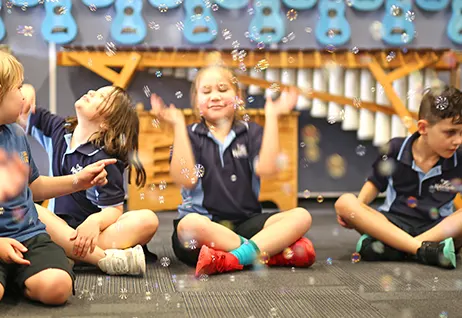
Our music program is all about bringing joy and connection to learning. Music gives students a fun and creative way to express themselves, build confidence, and feel included. It helps with communication, listening, and social skills while creating moments of happiness and calm. Through music, students not only learn new skills but also experience success and a sense of belonging in a supportive environment.
Physical Education
Our Physical Education (PE) program is an important part of learning for students with disabilities. It helps build strength, coordination, and motor skills while promoting overall health and wellbeing. PE also supports social interaction, teamwork, and confidence through fun, inclusive activities. By encouraging movement and participation, the program creates opportunities for students to develop independence and enjoy a sense of achievement in a safe and supportive environment. Students have opportunities to participate in schoolwide carnivals, such Cross country and Athletics days.
Art
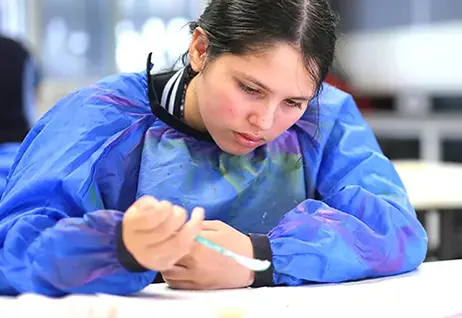
Our art program gives students with disabilities a creative way to express themselves and explore their imagination. Art activities help develop fine motor skills, problem-solving, and sensory awareness while building confidence and independence. It also provides a calming, enjoyable experience that encourages communication and social interaction. Through art, students can celebrate their individuality and experience success in a supportive, inclusive environment.
Science
Our science program gives students with disabilities the chance to explore, discover, and learn about the world in a hands-on, engaging way. Science activities help develop problem-solving skills, curiosity, and critical thinking while supporting communication and social interaction. By making learning fun and practical, the program builds confidence and encourages students to connect what they learn to real-life experiences, fostering independence and a love of learning.